
Spring is making its way to the Upper Peninsula, which means it is prime time to add to your rock collection. The vast forests, shores, and geological formations of the Ontonagon area offer endless opportunities for rockhounding. Here’s a quick rundown of everything you need to know to have a bountiful harvest this season.
The Do’s and Don’ts
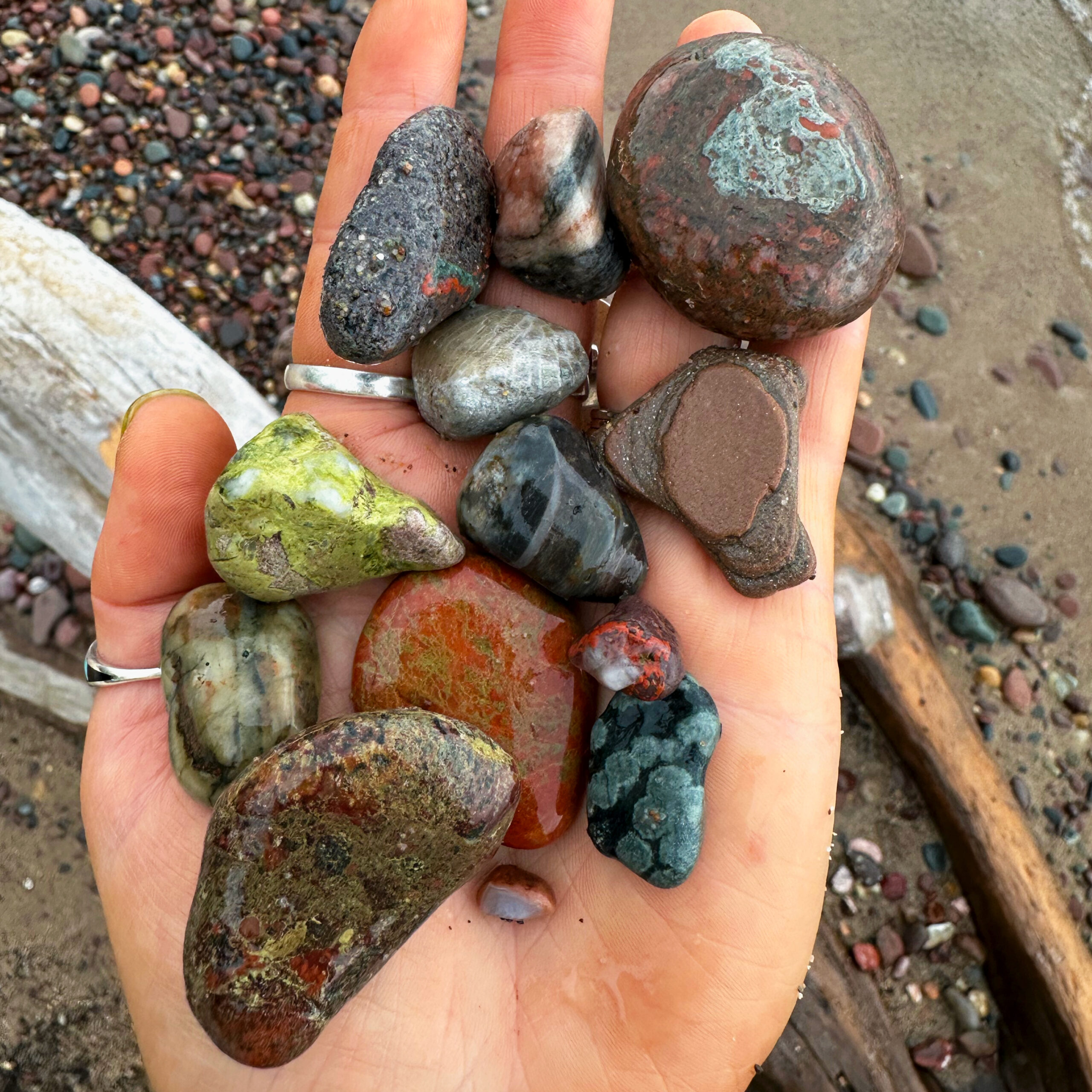
In order to have a smooth collection this year, here are some important guidelines to know before you fill your pockets with Lake Superior agates and more. It is best to keep yourself informed on regulations and always follow local signage or postings where applicable. This may mean inquiring with the local land management office or ranger stations.
Limitations
Federal
- In national forests and recreational lands, persons are limited to “ a small reasonable amount for personal use”, which is approximately ~10lbs per year.
- NPS (National Park Service) administered lands, such as the Pictured Rocks National Lakeshore, do not allow collecting of any kind.
State of Michigan Limits
- On state-owned land and public trust lands, one is limited to 25lbs per year, including invertebrate fossils. (This means 25 pounds TOTAL, not by type.)
Private Land Limits
- No limits on private land collection as long as you have expressed permission from the landowner
You can NOT collect any artifacts, fossils, meteorites, or antiquities of any kind from federal, state-owned, or public trust land. Keep yourself informed with the updated guidelines for rockhounding and annual limits through the State of Michigan.
Leave No Trace
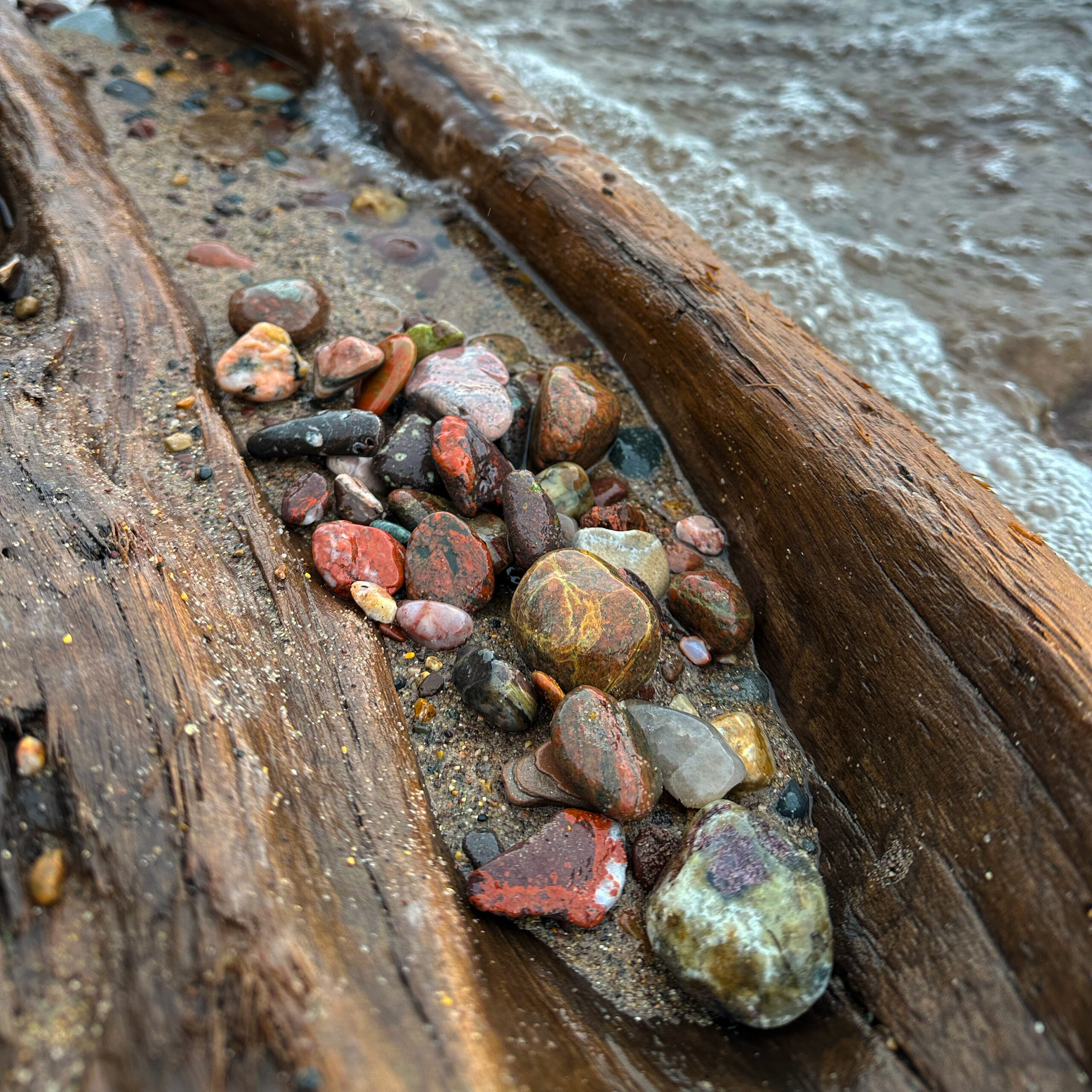
A critical thing to keep in mind when you head out to sleuth out rocks and agates are the seven Leave No Trace principles. Below is a loose outline of how to abide by these principles when you are out hounding.
- Plan Ahead and Prepare – be aware of weather and water conditions before you set out for the day. (Reminder – never go out in rough waters or stormy weather to try and collect.)
- Travel on Durable Surfaces – stay on trail when possible, otherwise being mindful of your impact on the environment around you. Keep an eye out for natural habitats or wildflowers to avoid disturbances.
- Dispose of Waste Properly – pack out any waste you create during your search! Before you head back home, scan the area for any trash you may have dropped along the way.
- Leave What You Find – be respectful of the legal limits for rock collection and observe cultural artifacts without disturbing or removing them.
- Minimize Campfire Impacts – when you need a break to eat and relax around the fire, follow regulations, bring a small stove for cooking if possible, and keep fires small.
- Respect Wildlife – stay mindful of the natural habitats you are in by observing wildlife from a distance and leaving them be.
- Be Considerate of Others – remember that your actions may impact others’ experience. Keep noise down and be courteous of the space you are occupying.
It is crucial to follow Leave No Trace principles no matter what outdoor adventures you embark on. Brush up on these guidelines and other resources on their official website.
Best Practices for Successful Collection
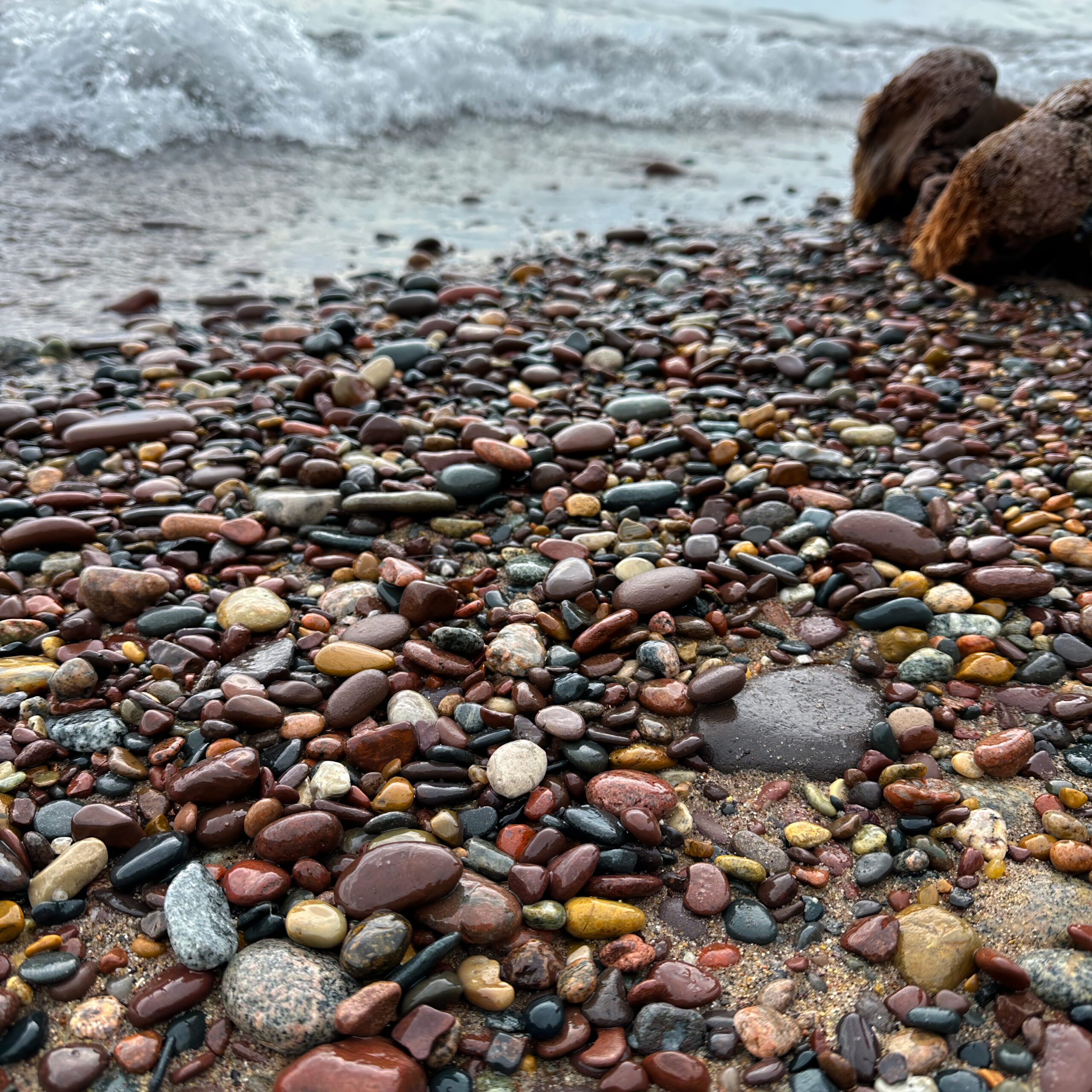
Now that you’ve brushed up on the regulations, you can get to hounding! Here are some top spots – as well as tips and tricks for fruitful rockhounding in Michigan.
When: Early spring, when there are cooler temperatures and less foot traffic on the beach.
- After storms, new material has washed up to the lakeshore. (safety first: never go out during a storm or in high wave activity!)
Where: There are some great spots within the Ontonagon and Porcupine Mountain region to collect your treasures. The Ontonagon River offers vast opportunities for fruitful finds and among the expansive beaches, there are many pockets of rocky shore to explore.
- Green Park: a public roadside park between Ontonagon and the Porkies with direct access to Lake Superior
- The Union Bay near South Boundary Rd: shoreline access with a great opportunity to hunt for those Lake Superior rocks.
- Big Iron River in Silver City: multiple points of beach access near Bonanza falls that can be great for finding Lake Superior agates and Yooperlites.
- Black River Harbor near Rainbow Falls: on the western end of the Porkies, this river offers great views as well as the opportunity to find copper ore, banded iron, banded prehnite, and more!
Tips and Tricks
- Patience, patience, patience. Focus on spending your time sweeping through small areas, raking through the material within a small radius, rather than covering as much ground as possible.
- Get in ‘dere. If you are safely able to do so, getting knee deep in the rocky water offers more opportunity to find more special pieces.
Gear UP for Rockhounding
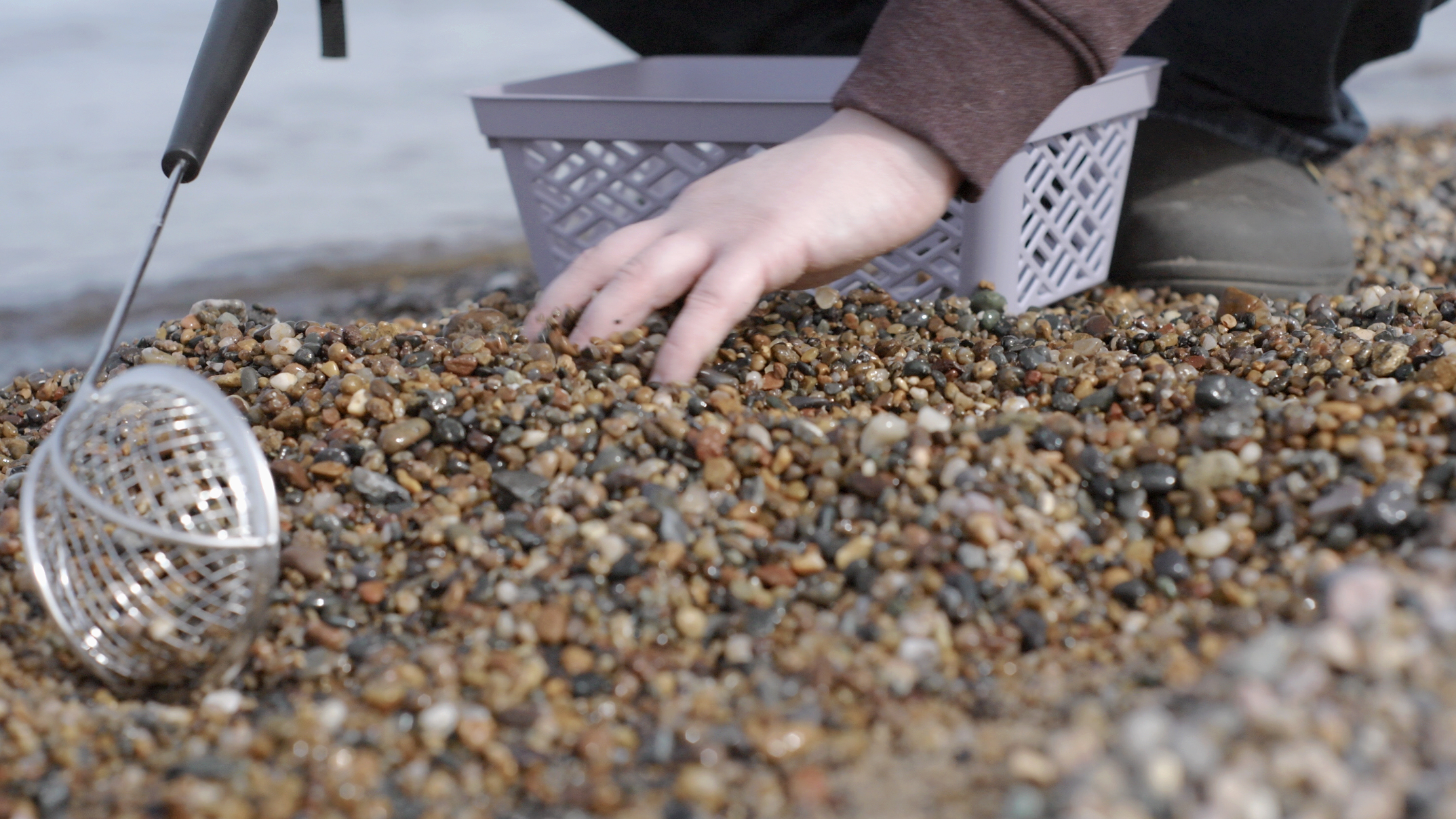
Rockhounding is accessible and fun without gear, but there are many upgrade opportunities to boost your experience.
-
- A small bag, bucket, or other vessel to carry your findings is a must. Of course, pockets work in a pinch!
- One great DIY for searching the water is a 5-gallon bucket with plexiglass affixed to the bottom, offering a much clearer sight at the beauties below the surface.
- For Yooperlites, a midrange 365nm UV flashlight will be helpful in your search. Find more information on sodalite-specific gear in the Yooperlite section below.
- Waders can be very helpful for spending time in the water during your search – especially during colder weather months. They also offer a little extra protection for your legs, but it may not be essential for most rockhounders.
- Other items that may prove helpful to your experience include sifters to move the material and resurface rocks that have been covered up as you move, or a spray mister for dry areas to reveal the true colors and markings of your findings.
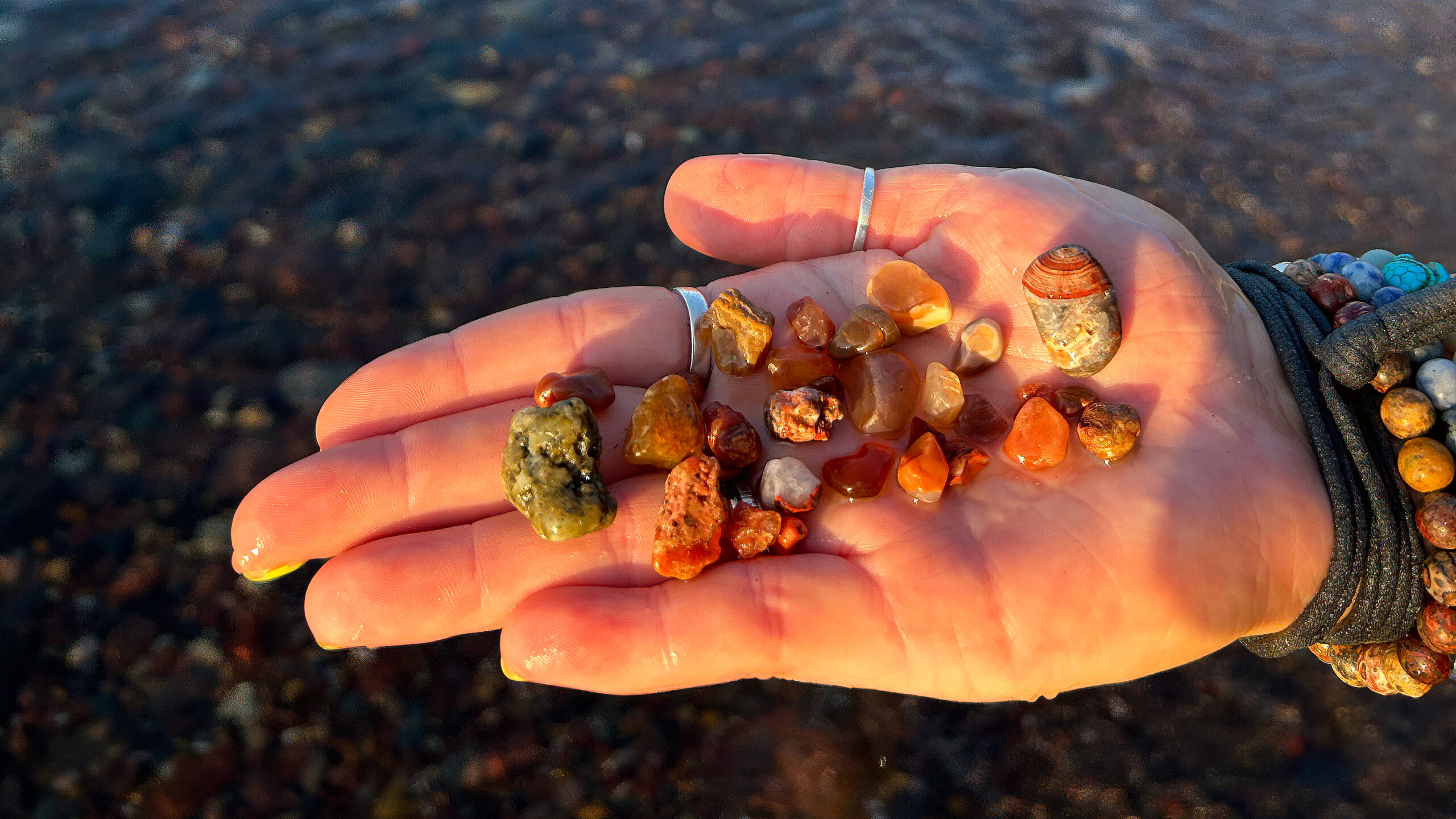 Agates of Lake Superior
The Lake Superior shoreline of the Upper Peninsula is brimming with agates. Beaches near or on basalt are optimal locations for spotting these.
What to look for: Transparency, banding, interesting patterns, and glassy/waxy sheens.
Agates are most commonly red, green, or brown thanks to their iron content. Their banding should alternate in colors or patterns and have some transparency to them. No clear banding? Not an agate.
If you shine a light or hold your agate up to the sun, you should be able to see light passing through.
*Remember the suggestion of having a spray bottle on hand for dry areas? This especially comes in handy for agates. Before you dismiss a rock, give it a dip or spritz, and you may find vibrant colors and banding appear before your eyes.
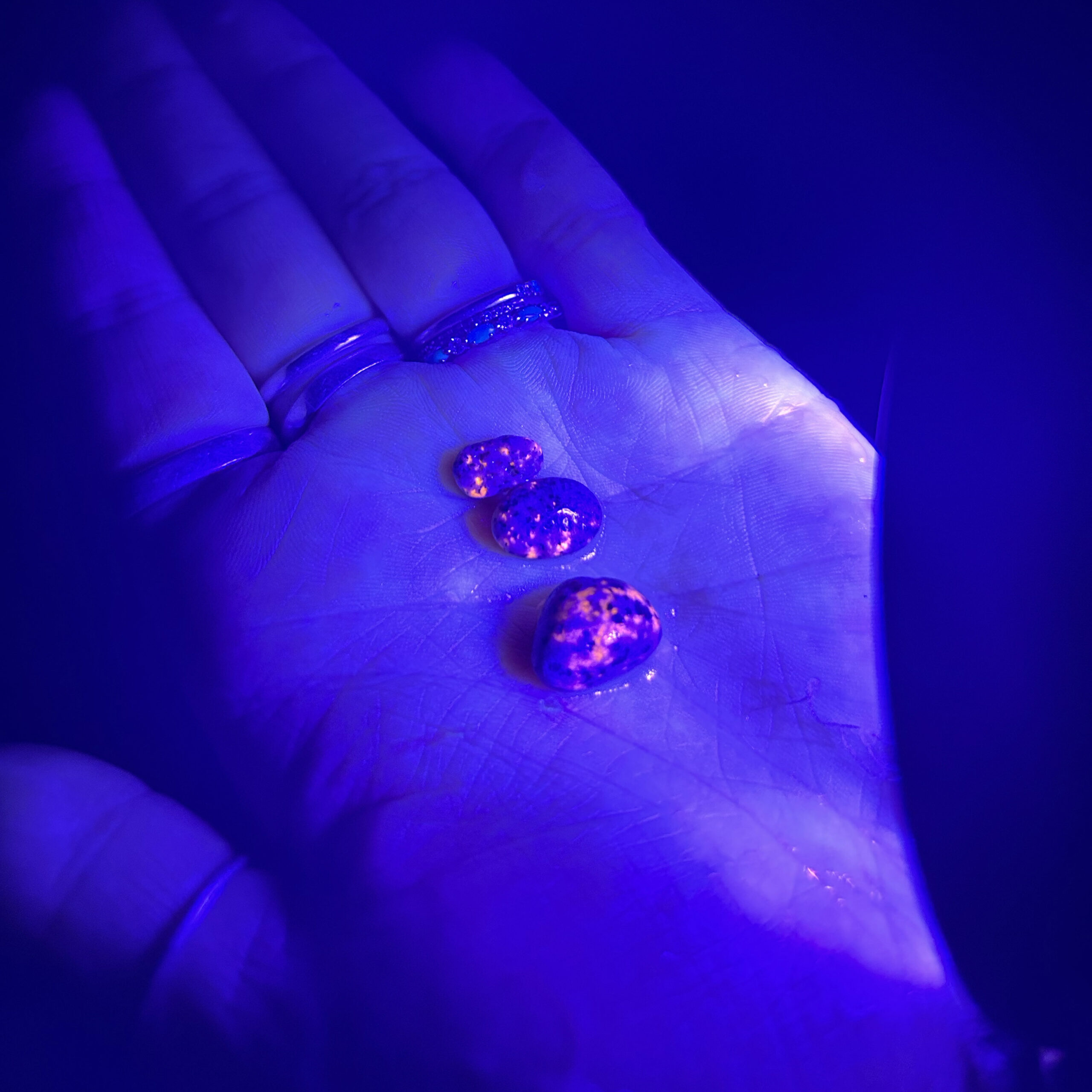
Yooperlites & other specialties
“Glowdalites” or fluorescent sodalite are often found in the northern lower peninsula and around the shores of Upper Michigan. Despite the nickname yooperlite, these igneous rocks hail from Ontario, Canada, and were introduced to Michigan through glacial movement.
A mid-range 365nm UV light is often best to spot these fluorescent beauties.
- Protect your eyes and skin from the UV rays with protective glasses and UV protective clothing.
- Be mindful of your light beam! Keep your light down, sweeping the ground as you walk and never shine your lights at people or into residences.
Rich copper and mining history and natural geological formations mean a good chance at finding pure native copper and banded iron in the area.
One great opportunity to get your hands on copper is at the Caledonia Mine. Reserve a spot and receive an ore pile of your own to dig through and uncover your own piece of the area’s history. While you’re in the area, be sure to stop in at the Gitche Gumee Landing Gift Shop, where they have an extensive collection of local rocks and minerals, as well as artisan products created from the natural products of the area.
The Western Upper Peninsula area has endless opportunities for a rockhounding adventure like no other! With these resources and locations, you are sure to come out of your next agate hunting trip with a grin on your face and a bag full of treasures!